In July 2009, while 2NE1 was tearing up the charts in Korea with their hits “Fire” and “I Don’t Care,” their big brother group Big Bang was hustling to climb their way up the charts in Japan.
When I first saw “Gara Gara Go,” I was thrilled to say the least. Big Bang isn’t exactly known for their in-sync choreography. They usually rely on Taeyang or Seungri to hold down the dancing, at least in their music videos. So to see that they actually dance together during the chorus and breakdown, it was a welcomed surprise.
In August of 2009, they released their first full-length Japanese album, self-titled “Big Bang”. On it, they had Gara Gara Go and some other hits I jammed out with through the summer. But perhaps my favorite was “Stay”.
I must have played that song a 100x that summer. Not only was it a good song to write to, but it’s one of those songs you can take to the beach, go for a walk, and simply dream. Back then, such inspiration was needed. I was only 23 and just now embarking on my career as a screenwriter. I could take all the inspiration I could get. Continue Reading
Heads up, in this chapter, you’re going to read a lot of personal details. Because it’s during this time in which I really started to grow.
In April of 2007, I began my six-month leave from film school in order to really find out who I was and what I wanted to do with my life. During this time, all I did, almost every day was work at Pizza Hut. That’s right. All I did every day was drive my 1999 red Oldsmobile Alero and deliver pizzas.
I couldn’t have done it without video games, WWE…and anime. Haha! By then I had my own one-bedroom apartment, friggin, finally. No more sharing spaces or coming home to half my bottles of water missing. But this also means that I’d have no one watching me really pig out on all the pizza and wings I could eat every night.
I don’t want to get into how much of a glutton I was. I have other essays for that. But the point is, when you have no direction in life…entertainment gives you something to look forward to.
With the WWE, it’s a continual story line by which you have something to look forward to every week, twice a week. I had just bought a PS3 and was getting down to some Marvel Alliance. I was also jamming out to a Korean hip hop group I just discovered called “Epik High,” with hits like “Fly” and “Paris”.
But the main thing that really put a smile on my face was an anime called “Bleach”.
That’s right, if we have any Bleach fans in the house. Their first season had a catchy theme song for their opening. It was called “Asterisk” by Orange Range. In May of 2007, I remember a lot of blazing hot days listening to Orange Range. My car broke down so many times, Tire Plus became kind of a hangout for me.
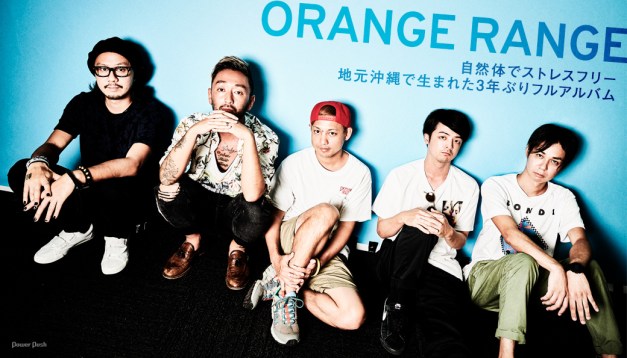
The thing about Orange Range that appealed to me…oddly enough was the rapping. They didn’t do metal music like Dir En Grey, nor did they have a heavy-handed edgy sound like Miyavi. It was just rock. They had three vocalists that could sing, rap, and blend their voices. Honestly, I thought that was just so cool.
Mind you, I’m not a rapper. I don’t pretend to be an expert in hip hop or the art of the flow. By then, I’ve come to notice that almost every group has rappers in which one is bass-heavy, and the other is lighter, or more sharper in tone. For instance in Big Bang, you have TOP with his bass-heavy voice, while G-Dragon is sharper. The Korean hip hop group Epik High was the same. You had DJ Tukutz providing the music, Tablo was the sharper, lighter tone, while Mithra Jin had a deeper voice.
Orange Range was the same, except they didn’t just have two. They had three, one bass-heavy, one-middle range, and one high-ranging. A good, clear example of what I’m talking about is with this gem, “Kirikirimai”.
At :10, you have the middle range
At :17, you have the high range
At :26, you have the low, bass heavy rapper.
“Viva Rock,” “Chesto,” and “Twister” were other favorites. It’s peculiar and I’m ashamed to say, I never cared to look up their background or memorize the member’s names.
Perhaps it was because as soon as I discovered Orange Range, it was just a matter of days before I learned about Uverworld. I know that sounds like a diss to Orange Range, but believe me it’s not my intention. Orange Range was awesome…but Uverworld blew me away.
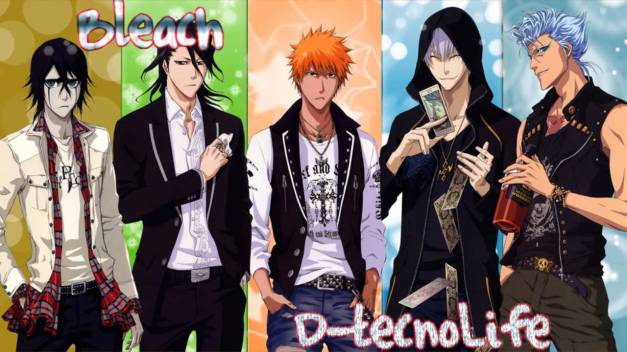
In watching “Bleach,” once you get past episode 25, they have a new theme opening. It’s a song called “D-TecnoLife” by Uverworld.
No lie…I played that song so many times that I can literally sing the lyrics and sing it well.
By December of 2006, I was looking for something new. Something that matched my rebellious attitude, my angst towards college, my resentment for the superficial, something to keep me going.
*disclaimer: If you hadn’t read the intro, the following is a personal memoir about my 13-year journey of exploring Korean and Japanese music
I remember…I was working on a project for my DVD Studio Pro class when I came across the “Obscure” music video. I used it for my assignment. The first time I heard about Dir En Grey was actually when I got into MySpace in the summer of 2005. One of my first long-distance friends was this girl out of Utah. On her page was an image of Toshiya, the bassist. Apparently, she had a crush on him. A lot of women were crazy about him.
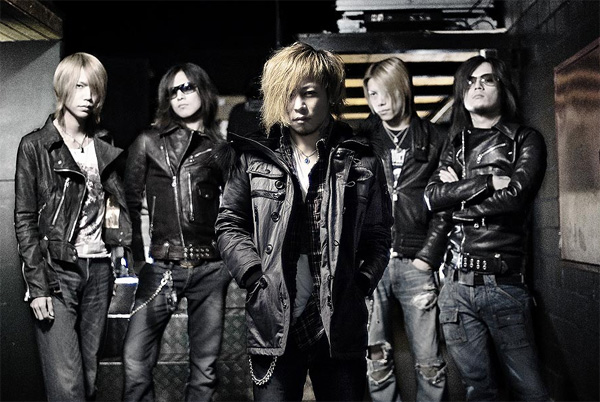
The images of Dir En Grey looking like zombies, really didn’t entice me to go and listen to their music. At the time, I was very much into Miyavi’s sound, which was edgy, but had a more upbeat positive vibe. Fast-forward to the fall of 2006, when the nostalgia of being in college and out from under my parent’s roof wore off and I was now staring the “real world” directly in its corrupt and wicked face…I was ready for mother-effin Dir En Grey.
II. The J-Rock Phase: Miyavi, Gackt & more L’Arc En Ciel
J-Rock stands for Japanese Rock.
By Spring Break of 2005, during my senior year of high school, I learned that I was accepted into a film school in Tampa, Florida. Knowing my future was secure was a relief. There wasn’t a lot of angst or trepidation in my heart at the time. Just full of hope and an eagerness to leave the nest. Every day since, I woke up, fully aware that it was another day to say goodbye to Georgia and the friends I had come to depend on.
*disclaimer: If you hadn’t read the intro, the following is a personal memoir about my 13 year journey of exploring Korean and Japanese music.
Having already been introduced to L’Arc en Ciel’s “Ready Steady Go” video…I was curious. What else they got? I learned that their genre was called “j-rock” so I searched for that on Limewire.
Apparently in 2004, early 2005, the biggest names in J-Rock were indeed L’Arc-en-Ciel…as well as a Japanese rock vocalist named Gackt. And man…hahahaha! Not gonna lie, I’m about to reveal some embarrassing stuff in talking about these guys.
So, mind you, from 5th grade to 12th, I was raised in Augusta, Georgia…which is considered a more country, gritty version of Atlanta. Meaning, everything you’ve heard regarding the stereotypes of blacks and whites had some truth to them in this city. That’s not to slight Augusta…because the thing is, the people know how they are and they don’t see it as a bad thing. Yes, there’s racism and a somewhat semblance of unspoken segregation, but people seemed cool with that. Most teens tended to stick to their own…
Had I been born and spent my whole life in Augusta, I probably would’ve fallen into a stereotype as well. But my parents were military. I moved around and attended multiple elementary schools ranging from south Florida to a place deep in the heart of Texas called Fort Hood. When you’ve moved around as much as I have, you know the world is much bigger. That America is made up of so many cultures.
And when you’re attending school on a military base, you’re afforded the luxury of just being yourself and making friends, because all the other kids are just like you. They’ve all moved around through their parent’s military transfer. So they understand and are more likely to accept you the way you are. But once you leave the base and start going to school with the civilian folk…yeah. You’ll find how different you are. And I think on a subconscious level, the natives don’t take too kindly to some new kid coming in and messing up the status quo.
My point in mentioning this, is that for years of being more or less stuck in Augusta, Georgia…I wasn’t exposed to a lot of diversity when it comes to the cultures. So when I discovered Gackt and L’Arc-en-Ciel…it was somewhat of a shock that had me questioning my own sexuality.
Remember, this was early 2005, a very conservative Christian time in the country. Lady Gaga wouldn’t blow up till late 2008-ish. And you see, in Japan they embrace this thing called “Visual Key”. Plainly put, it’s straight up androgyny, a style where men make themselves appear like women. They wear feminine makeup, eye-lashes and longer hair where it becomes difficult to discern whether they are male or female.
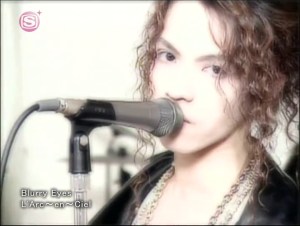
L’Arc-en-Ciel’s lead singer was notorious for this. Even without the make up, Hide looks like a girl. And just to make sure I wasn’t going crazy, I’d eventually ask my first roommates in Tampa to rate his appearance in “Blurry Eyes” on a one-to-ten scale. And my roommate without hesitation said… “I’d hit that.” As you can imagine, I laughed for some time. Not just at the humor in it, but the realization that it wasn’t just me. I’m not gay and I don’t think I should feel bad if I’m fooled by a person’s appearance.
The K-Pop Chronicles – A 13 Year Love Affair By Rock Kitaro
When I was in college, everyone told me that my love for Korean pop music was just a phase and that it would pass. Thirteen years is a long time to simply call it a phase.
Ever since 2005 I’ve been listening to popular music from the countries of Japan and South Korea. This was back before everyone else heard of “Gangnam Style.” Back before BTS took the Billboards. Back before Twitter and Instagram determined one’s prestige.
Ladies and Gentlemen, I’ve watched the rise of Big Bang since they were still trainees. I rocked out to Dir En Gray. Witnessed the fall of DBSK when they were near untouchable. I went back and explored the history of legendary groups like Seo Taiji, H.O.T, NRG, Turbo, and stumbled upon gems like Clazziquai, Epik High, Drunken Tiger, and Dragon Ash.
But…as you can imagine…we’re talking about a span of thirteen years. The music has changed. I’ve grown up.
Since this journey of mine has come to an end, I thought I’d take a moment and tell you my story. In the upcoming memoirs, you will see me as an impressionable college freshmen who lived out his twenties dishing on some of the best kpop and jrock ever produced. It’s been an honor, really. You’re going to see what real diversity looks like. Hint: it’s not about race, it’s about taste. Back when the charts weren’t saturated with artists who look the same, all producing the same thing.
That being said…fair warning. You might read some things that strike a nerve if you’re a hardcore fan of certain groups. Mind you, this is just one man’s opinion, the perspective of one who’s been watching the scene since 2005. So if you just discovered kpop in 2016 and get mad talking about how so and so is the greatest when you haven’t even heard of H.O.T or Seo Taiji…yeah, you’re in for a bad time. This is my journey. My discovery of musical groups and the evolutionary effects they had on my life. Sit back and let me show you what I saw…starting in the middle of 2004.
Here’s a taste with a music video I edited in 2013, compiling some of the most impressive kpop dances I’ve ever seen.
Dance Appearances in Order – Song “Jiggy Get Down” by the Untouchables
1. :10 – Yunho of DBSK
2. :37 – Xiah of DBSK
3. :52 – Hyunseung, formerly of BEAST
4. 1:02 – Kikwang (AJ) of BEAST
5. 1:12 – Rain (Bi)
6. 1:31 – 2pm
7. 1:50 – 2NE1
8. 2:10 – Untouchables
9. 2:30 – Taeyang
10. 2:50 – DBSK
11. 3:09 – Big Bang
12. 4:08 – Block B
13. 4:17 – BEAST
14. 4:27 – Big Bang
The Meaning Behind “Dragon Ash” – My exploration of Jpop and Kpop By Rock Kitaro Date: March 26, 2013
Dragon Ash
“Be Stronger, Fly Higher, Don’t Be Afraid”
Those are the opening lyrics to Dragon Ash’s “Underage Song,” a song dedicated to the youth, inspiring them to strive no matter what.
I’m currently in the midst of writing the second episode of one of my short stories. The “Dragon Ash” series I’ve created is named after my favorite band. Not my favorite Japanese band. Not my favorite rock band. But favorite band, period. And out of respect and overwhelming gratitude, I felt it was high-time I explained myself. If by reading the end of this memoir, members of Dragon Ash thinks I should change the title of my story, I will.
Let me take you back to the end of 2004. In the midst of my senior year of high school something was happening to me. I think the last English CD I bought was Slipknot’s “Vol. 3 Subliminal Verses.” After that, I confess that I couldn’t help but to simply download my music. But the music I took an interest in downloading wasn’t American made songs. My dormant rebellious nature kicked it up a notch and I think I just got fed up with English lyrics. I think after 18 years of life, I got tired of hearing the same lyrics over and over again. I felt that I had heard every possible way that an artist could overextend “why” or say “I love you”. Not to mention, the kind of music that was clouding the airwaves during this time was just…just terrible. And so…I moved away from American music for a brief period of time.
Using filesharing sites like limewire, I began with downloading instrumentals. Music from anime, video games like Need for Speed and background music from movies like Daredevil and Vin Diesel’s XXX. My friends back then understandably thought it was puzzling, as did I for a time. But then I found a similarity between those instrumentals and metal, another genre I discovered a liking for at the time.
With some metal songs from artists like System of a Down and Slipknot, until I looked up the lyrics, other than the main chorus I had no idea what they were saying. And on a subconscious level, I think I preferred it that way. I couldn’t articulate “why” back then, but I think I was tired of lyrics dictating to me what to think, how I should feel and how I should go about situations. When I listen to music, I want to simply feel good. And 2004’s mainstream music kind of made me feel shitty because I wasn’t and still don’t, feel like I’m part of the mainstream.
Giving you this background information was crucial to help you understand how I was able to transition into what happens next because something spectacular happened.