It’s really unfortunate, but I don’t think I’ve ever felt this way before.
You ever look forward to something for a long time, only to slowly watch that excitement turn into concern? Then concern turns into dread? Then dread turns into, “You know what? I don’t think I can support this.”
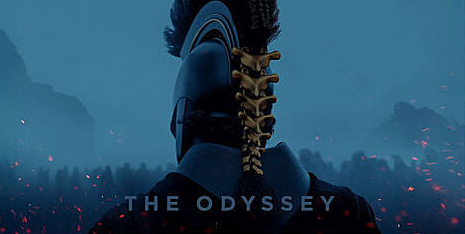
That’s where I am with Christopher Nolan’s The Odyssey.
For those who don’t know, Christopher Nolan — the director behind The Dark Knight, Inception, and Oppenheimer — is releasing a film adaptation of Homer’s The Odyssey.
Just hearing that alone should be enough to build excitement.
The story of The Odyssey is already epic. You have Odysseus, king of Ithaca, trying to return home after the Trojan War. You have monsters, gods, temptation, shipwrecks, death, longing, loyalty, wisdom, and the brutal cost of survival. Combine that with the director of The Dark Knight and Oppenheimer, and it sounds like a no-brainer.
It sounds like, “Shut up and take my money.”
But then, little by little, you start hearing about the choices being made. The smile fades. The excitement dampens. Interest turns into disgust. Anticipation turns into apprehension.
POINTS DISCUSSED:
- 1st Red Flag – The Black Helen of Troy
- 2nd Red Flag – Eliot Page as Achilles…
- 3rd and Final Red Flag – A Feminist Take on The Odyssey
- Why I Can’t Support It –
- But What About Christianity?
1st Red Flag – The Black Helen of Troy
Let’s start with one of the biggest points of backlash: Lupita Nyong’o reportedly being connected to the role of Helen of Troy.
And I’m just going to say what a lot of people are thinking.
If I go to see a serious movie about samurai in the Tokugawa era, I’m not going to be upset if there are no Black people in it. If I go to see a serious movie about King Arthur, I don’t care if there aren’t any Black people in it. If I go to see a serious movie rooted in ancient Greek myth and Trojan War tradition, I want the world to feel like the world it is supposedly depicting.
That should not be controversial.
That should be basic storytelling.
This is where people often try to oversimplify the complaint. They’ll say, “Oh, so you just don’t want Black people in the movie?”
No.
That’s not the real issue.
The real issue is immersion.
As an artist and an author, that’s what bothers me most. When you ask an audience to enter a world — especially an ancient, mythic, serious world — every major creative choice either strengthens the illusion or breaks it.
And when the audience can see modern Hollywood politics before they can see the story, the spell is broken.
It’d be one thing if this was a parody or something like “A Knight’s Tale” where you can tell the script and direction isn’t taking the story too seriously, it’s more about fun and entertainment.
But I don’t think Christopher Nolan can use that excuse with The Odyssey. You can tell that they’re definitely trying to take this story seriously.
And if that is the case, which I believe it is, then your story…myth or not…has to be believable.
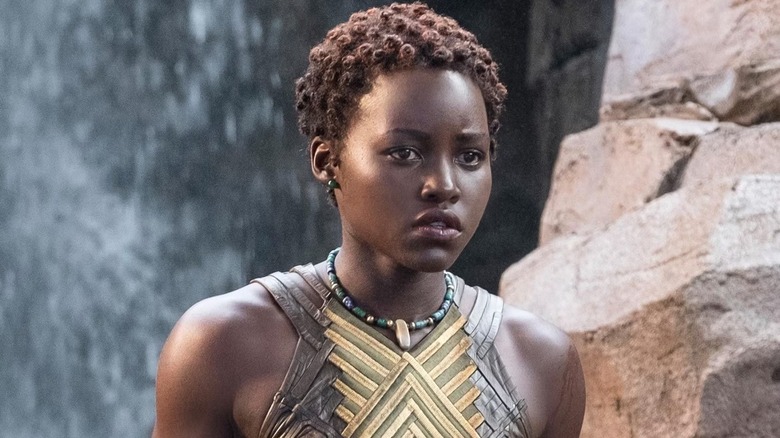
I mean no disrespect to Lupita as a person…but in what universe do they expect us to believe that Lupita Nyong’o is the face that launched a thousand ships.
Is she pretty? Sure.
Is her beauty coming anywhere near the conversation of the most beautiful woman in the world….No.
I understand the concept of “suspending your disbelief” but give me a break.
Casting Lupita in that role was the wrong choice. And honestly, I think accepting the role was a mistake too. She had to know what kind of backlash this would create. She didn’t have to step into that. She chose to.
2nd Red Flag – Eliot Page as Achilles…
This is just rumor, they say…but it’s been a strong rumor long enough. For no one to come out and dispute that Eliot Page will be playing Achilles…that’s a problem and a mistake.
So, I’m just going to say it.
When I was in college, I remember seeing Ellen Page in movies like the X-Men sequels and the highly acclaimed “Juno.”

I thought she was really cute. There, I said it.
I thought she was a great actress, full of promise and potential. To see her now…I’m sorry, it’s just incredibly off-putting. Can’t say whether it’s off-putting to everyone…I’m speaking on behalf of myself.
That’s just one aspect to it…
The other…we’re talking about Achilles of all characters.
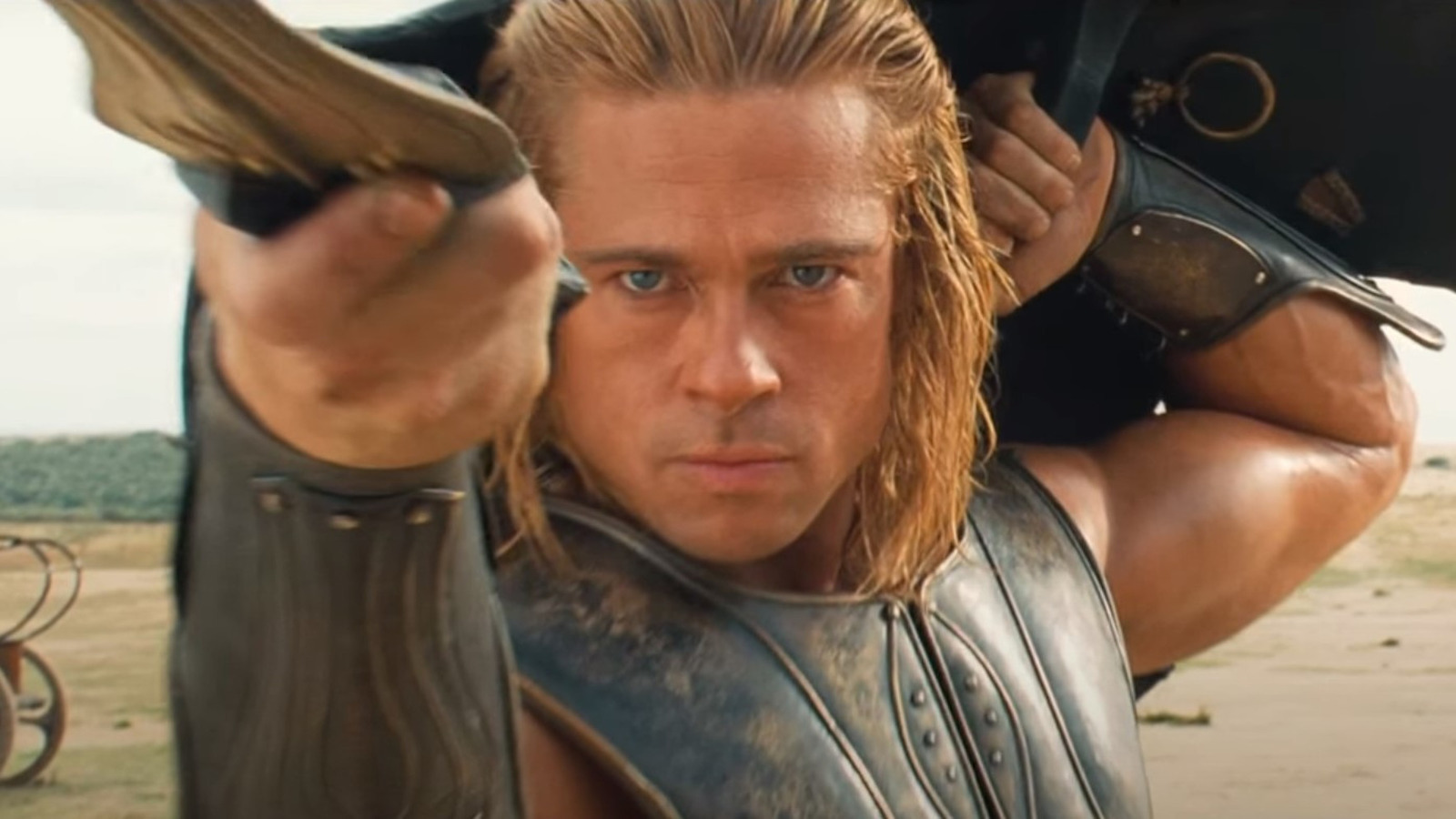
If Eliot Page was playing Hermes…I might be more accepting of that.
But Achilles?
We are not talking about some random background soldier. We are talking about Achilles — the greatest warrior of the Trojan War. The embodiment of martial excellence. The terrifying young fighter whose rage becomes the engine of The Iliad.
The man whose name has survived for thousands of years as a symbol of strength, pride, beauty, violence, glory, and tragic vulnerability.
So if the Achilles rumor is true, then it represents something larger than just one casting choice.
It represents Hollywood’s strange habit of taking a masculine archetype and trying to hollow it out, soften it, subvert it, or turn it into a statement.
And that brings me to the bigger question:
Why?
Why is Hollywood so uncomfortable letting masculine heroes simply be masculine heroes?
We keep hearing that young men lack direction. We keep hearing that men are falling behind. We keep hearing that there is a crisis of masculinity.
Then, when Hollywood gets its hands on one of the most iconic masculine figures in all of Western literature, what does it do?
Potentially casts against the very essence of the character.
What are we doing here?
Seriously.
At some point, you have to ask whether these people even like the stories they’re adapting.
3rd and Final Red Flag – A Feminist Take on The Odyssey
The third red flag is the rumor that Nolan’s version of The Odyssey may be influenced by Emily Wilson’s 2017 translation.
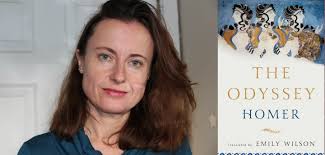
Now, I want to be careful here. I’m not saying this is confirmed. But the rumor itself has become part of the conversation because people already distrust Hollywood.
And honestly, can you blame them?
We have seen this pattern too many times.
Take a classic story. Take a heroic male figure. Reframe him as less capable, less admirable, less certain, less heroic, and more in need of correction. Then elevate the women around him until the moral of the story becomes painfully obvious:
The man only succeeds because women made him better.
Now, before someone says, “What’s wrong with men learning from women?” — nothing.
That’s not the issue.
The issue is when male heroism is constantly treated as something suspicious, outdated, dangerous, or in need of revision.
Matt Walsh provided a breakdown of Emily Wilson’s translation, focusing especially on her choice to introduce Odysseus as a “complicated man” instead of leaning into older renderings that emphasize his cunning, many turns, or skillful mind.
Odysseus is complicated. Of course he is. Anyone who has read The Odyssey knows that.
He lies. He schemes. He makes mistakes. He angers the gods. He loses men. He is brilliant, flawed, faithful in some ways, unfaithful in others, heroic and morally tangled.
But his defining trait is not confusion. It’s cunning. It’s wisdom. It’s problem-solving. It’s the ability to survive impossible situations through intelligence, endurance, strategy, and nerve. The man who survived because he could think.
That’s why he matters. That’s why the story has lasted.
Odysseus is not just a man who has bad things happen to him. He is a man who thinks his way through danger. That is inspiring.
That is something a boy can read and say, “I want to be sharper. I want to be wiser. I want to be braver. I want to keep going.”
So, when I hear that a modern adaptation may be more interested in making him “complicated” than cunning, I get concerned.
Not because complicated is wrong. But because complicated cannot become an excuse to diminish greatness.
A good adaptation can acknowledge Odysseus’s flaws without stripping him of the masculine competence that made him endure for thousands of years.
That’s what I’m worried Hollywood no longer knows how to do.
Given the trends…what I suspect will happen, is that nearly every good idea, every ounce of wisdom, solution, and inspiration Odysseus receives…will come from a woman.
If not for women…Odysseus would fail.
That will be the moral of this story.
I hope I’m wrong. I don’t think I am.
“So, what if that is the moral, Rock? You have a problem with men relying on women? You don’t think women should serve as a source of inspiration and wisdom?”
I think we should rely on God. I think God should serve as our source of wisdom and inspiration.
I’m not saying God has to be our only source…but he should come first. Our need and desire to please God should come before our need and desire to please women (or any human being). I believe we’re currently living in a society where that notion is reversed…and if we continue, it will be our downfall as a civilization.
Why I Can’t Support It –
I know this movie is probably going to make a fortune.
People are going to flood the theaters. It will probably be one of the biggest blockbusters of the summer. Critics will likely praise it. Social media will argue about it. Hollywood will get its money.
And maybe that’s part of the problem.
There’s a “let them eat cake” feeling to all of this.
No matter what choices they make, no matter how much they provoke the audience, no matter how many red flags people point out, the assumption seems to be:
They’ll still pay.
They’ll still show up.
They’ll still take it.
And maybe most people will.
But I don’t think I can.
Not this time.
Because for me, this isn’t just about one movie. It’s about the growing sense that Hollywood no longer trusts the stories it adapts. It doesn’t trust ancient heroes. It doesn’t trust masculine excellence. It doesn’t trust archetypes. It doesn’t trust the audience to appreciate a story unless it has been filtered through modern anxieties.
And if that is what The Odyssey becomes, then I don’t want to reward it.
But What About Christianity?
Now, some Christians might say, “Rock, you shouldn’t want to see it anyway. It’s Greek mythology. False gods. Pagan stories. Why are you even interested?”
That’s fair.
I have wrestled with the Christian objection to Greek mythology. And I understand that concern.
But I don’t see Greek mythology as a living religious temptation. I see it as classical literature. I see it as stories. I see it as an ancient civilization revealing what it admired, feared, worshiped, and misunderstood.
If anything, reading Greek mythology helped me recognize idolatry more clearly.
When you grow up reading about gods and goddesses with patronages — a god of war, a goddess of wisdom, a god of the sea, a goddess of love — it becomes easier to recognize when religious practices start drifting in that direction.
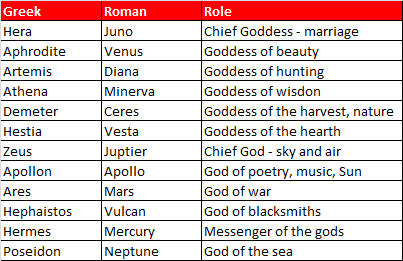
That is one of my issues with religions where people pray to saints. The shrines. The patron saints of this or that. The way human figures are treated as specialized heavenly intermediaries. I know some will object to that characterization, and I understand they have their own theological explanations for it. But from where I stand, I can’t help noticing the resemblance to older pagan patterns.
So no, I’m not worried that The Odyssey is going to tempt me into worshiping Athena or Poseidon.
I know idolatry when I see it.
And ironically, one of the reasons I know it is because I read so much mythology before I ever read the Bible cover to cover.


I’ll be skipping this one. Sounds horrendously bad.
LikeLiked by 1 person
Good for you for using your brain and saying what a lot of us are thinking. Many young people will go see it simply because Zendaya and Tom Holland are in it. Def some weird casting choices for many of the characters, and that seem to be political for sure. Smelled bad from miles away.
LikeLiked by 1 person