Ladies and Gentlemen, what I’m about to share with you is truly an honor. I witnessed the changing of the guard when it comes to the Korean music industry. Back then, DBSK was still the kings of Kpop. But in so many ways, they left their kingdom, vacated their throne. They ventured out to Japan in an attempt to carve out a new empire there.
Then…out of the blue. On Thursday August 16, 2007, Big Bang released their mini-album, “Always”.
I’m telling you…I’ve never heard anything like it. It was two days before my 21st birthday. Before I saw their live performance, I heard every song on that mini-album. The above video is a live performance of “Lie.”
Lie…would go on to become one of Big Bang’s signature hits and even won 2007’s song of the year award. Every track was fire, don’t get me wrong, but for me…the song “Always” was the best of 2007.
I remember that Friday night, I was closing as a Pizza Hut delivery driver. I know most people think of it as a crappy job where drivers have to go into seedy neighborhoods and deal with rude people. But the area in which I worked was an upscale part of the Tampa Bay area. We’re talking gated communities. My customers were Buccaneers and Tampa Bay Lightning players. My point being, the neighborhoods were mesmerizing with breathtaking landscapes and beautiful lightning.
I replayed “Always” again and again to a beautiful night. Nothing went wrong because the song kept me in a mellow, “its all good” mood. That’s the effect “Always” had on me. Just be cool and relax.
I was very pleased. It’s been one year since they released their first album and you can tell Big Bang had evolved. Each member had changed up their style and improved their performance, but none more so than Taeyang. He sheared off his braids, thank god, in favor of a stylish hat, making it iconic the same way Michael Jackson did with his hat.
More than that, his voice…Dude…In my chapter about Big Bang vs the Pretty Boys,you’ll notice I never made mention of a particular song called “My Girl.” It’s Taeyang’s solo and to be honest…I think I could’ve sung that song a lot better than him. It’s very garden variety and doesn’t leave much to aspire to.
But once I heard him sing in “Always” and “Lies,” it’s just incredible the transformation he undertook. I remember seeing the documentary about his trainee days where even YG praised him for his relentless work ethic, to practice and improve on his skill. And I saw it. He improved so much. Hahaha! I knew it. I knew these guys would take it to the top. I was witnessing the rise of Big Bang, the new kings of kpop.
Heads up, in this chapter, you’re going to read a lot of personal details. Because it’s during this time in which I really started to grow.
In April of 2007, I began my six-month leave from film school in order to really find out who I was and what I wanted to do with my life. During this time, all I did, almost every day was work at Pizza Hut. That’s right. All I did every day was drive my 1999 red Oldsmobile Alero and deliver pizzas.
I couldn’t have done it without video games, WWE…and anime. Haha! By then I had my own one-bedroom apartment, friggin, finally. No more sharing spaces or coming home to half my bottles of water missing. But this also means that I’d have no one watching me really pig out on all the pizza and wings I could eat every night.
I don’t want to get into how much of a glutton I was. I have other essays for that. But the point is, when you have no direction in life…entertainment gives you something to look forward to.
With the WWE, it’s a continual story line by which you have something to look forward to every week, twice a week. I had just bought a PS3 and was getting down to some Marvel Alliance. I was also jamming out to a Korean hip hop group I just discovered called “Epik High,” with hits like “Fly” and “Paris”.
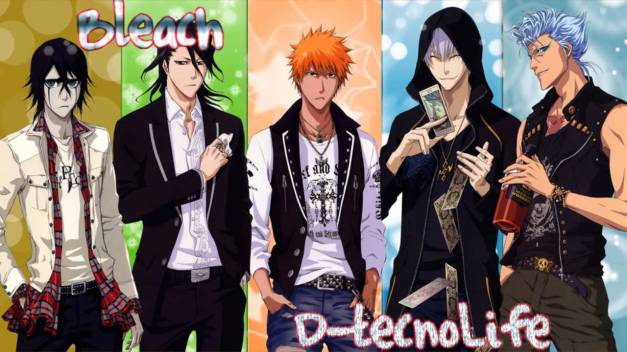
But the main thing that really put a smile on my face was an anime called “Bleach”.
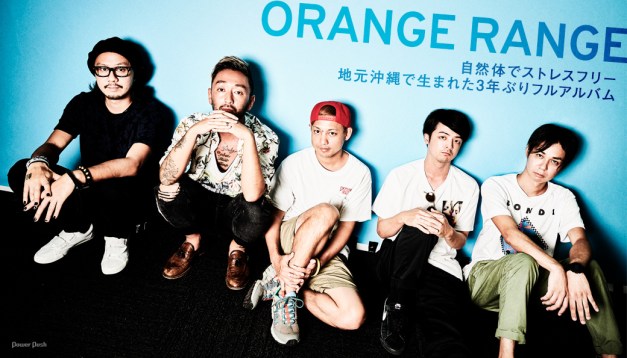
That’s right, if we have any Bleach fans in the house. Their first season had a catchy theme song for their opening. It was called “Asterisk” by Orange Range. In May of 2007, I remember a lot of blazing hot days listening to Orange Range. My car broke down so many times, Tire Plus became kind of a hangout for me.
The thing about Orange Range that appealed to me…oddly enough was the rapping. They didn’t do metal music like Dir En Grey, nor did they have a heavy-handed edgy sound like Miyavi. It was just rock. They had three vocalists that could sing, rap, and blend their voices. Honestly, I thought that was just so cool.
Mind you, I’m not a rapper. I don’t pretend to be an expert in hip hop or the art of the flow. By then, I’ve come to notice that almost every group has rappers in which one is bass-heavy, and the other is lighter, or more sharper in tone. For instance in Big Bang, you have TOP with his bass-heavy voice, while G-Dragon is sharper. The Korean hip hop group Epik High was the same. You had DJ Tukutz providing the music, Tablo was the sharper, lighter tone, while Mithra Jin had a deeper voice.
Orange Range was the same, except they didn’t just have two. They had three, one bass-heavy, one-middle range, and one high-ranging. A good, clear example of what I’m talking about is with this gem, “Kirikirimai”.
At :10, you have the middle range
At :17, you have the high range
At :26, you have the low, bass heavy rapper.
“Viva Rock,” “Chesto,” and “Twister” were other favorites. It’s peculiar and I’m ashamed to say, I never cared to look up their background or memorize the member’s names.
Perhaps it was because as soon as I discovered Orange Range, it was just a matter of days before I learned about Uverworld. I know that sounds like a diss to Orange Range, but believe me it’s not my intention. Orange Range was awesome…but Uverworld blew me away.
In watching “Bleach,” once you get past episode 25, they have a new theme opening. It’s a song called “D-TecnoLife” by Uverworld.
No lie…I played that song so many times that I can literally sing the lyrics and sing it well.
While I was getting my metal fix listening to Dir En Grey, my hunger for good kpop, that mellow, that yin to my yang, never ceased. By early March 2007, I had replayed H.O.T, DBSK, and Big Bang songs as much as I could…but I needed something new.
Back then, I was part of a kpop forum where users had threads of their favorite groups and singers. I believe it was called z-degrees.net. And one particular thread had a massive collection of kpop discographies. We’re talking every album ever produced before 2006 was here for the stealing. Pretty much what it was. But at the time, in my 20-year-old mind, I didn’t see it as stealing. I saw it as sharing.
Anyways, I discovered that my legendary H.O.T., had produced more than just the five albums I originally found. They produced a soundtrack called Age of Peace, OPT. Of course this was a treat for me. Because it was rockin, reminiscent of their “Iyah” album. But I also found out that the lead singer, Kangta, wrote a song for a rival/contemporary group called NRG, titled “Sad Rain.”
The song struck a chord with me. I can’t say that it blew me away from the get-go, but it definitely lingers long after you hear it. So I sought out NRG to see what this band was about. And lol, it was the next video I saw that hooked me.
Hahaha! So let me explain. Because if you’ve read my memoirs up to this point, you’ll find a contradiction with me. I’m not keen on groups imitating one another. I don’t like the idea of everyone cashing in on a trend. I respect creativity, the pioneering of treading into uncharted territory.
However, I will say that I’m in favor of artists of all walks of life, whether you’re a writer, painter, sculptor, actor, or musician…if you admire another artist, imitate them and then go a step further in the pursuit of doing better than what they did…I can applaud that. Sort of like how Michael Jackson admired James Brown and Jackie Wilson, imitated them, and then went on to do something better. No lie, I had a huge debate in my class about this back then.
The problem with today’s music is that there are too many who are merely content on doing exactly the same of their contemporaries, following the same formula, comfortable with that niche without the courage of showing any individuality that might separate them from that which they set out to copy in the first place.
Goes without saying, H.O.T was the first of its kind when it comes to kpop music that blended rock, rap, and dance pop elements. Next to them came Sechskies of DSP Entertainment to give H.O.T. a run for their money. Then, it was NRG.
Despite how much I absolutely loved and played out “Messenger,” it was hard to look past the thought that NRG was still merely an imitation of H.O.T. Not a cheap imitation by any means, but an imitation nonetheless.
That was…until I heard their third album and the song, “Face”
The thing that separates NRG from H.O.T and the other bands is their rap and the intensity of their songs. Their third album in particular…my God. “Face” is from their third album, but there’s another song that’s 10x more significant.
You gotta understand, NRG was a boyband, a kpop group on paper. But their music, their lyrics, their rap and blended genres…Just listen to this song and you’ll see what I’m talking about:
NRG “Guwoh 003”
Unfortunately…tragedy struck this group just after the release of their third album.
By December of 2006, I was looking for something new. Something that matched my rebellious attitude, my angst towards college, my resentment for the superficial, something to keep me going.
*disclaimer: If you hadn’t read the intro, the following is a personal memoir about my 13-year journey of exploring Korean and Japanese music
I remember…I was working on a project for my DVD Studio Pro class when I came across the “Obscure” music video. I used it for my assignment. The first time I heard about Dir En Grey was actually when I got into MySpace in the summer of 2005. One of my first long-distance friends was this girl out of Utah. On her page was an image of Toshiya, the bassist. Apparently, she had a crush on him. A lot of women were crazy about him.
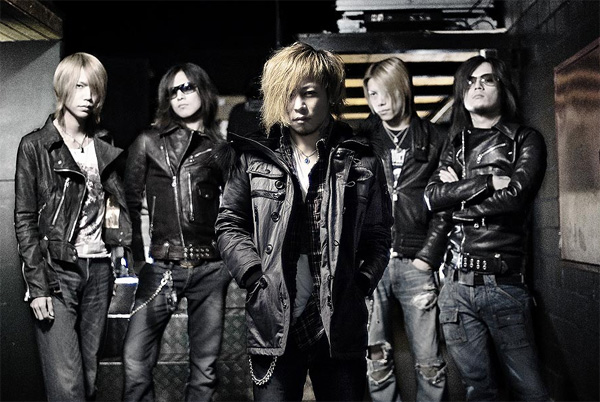
The images of Dir En Grey looking like zombies, really didn’t entice me to go and listen to their music. At the time, I was very much into Miyavi’s sound, which was edgy, but had a more upbeat positive vibe. Fast-forward to the fall of 2006, when the nostalgia of being in college and out from under my parent’s roof wore off and I was now staring the “real world” directly in its corrupt and wicked face…I was ready for mother-effin Dir En Grey.
I know…the title of this chapter is enough to spark some disgruntled looks. If you’ve heard of Big Bang before reading this memoir, it might sound confusing. But as someone who’s been into k-pop since nine months before they’re first release, I can tell you that they’re debut was anything but an actual Big Bang.
Let’s start from the beginning.
By the fall of 2006, I had just turned 20-years-old and DBSK was still my favorite kpop group. H.O.T. would be the greatest in my book until about the year 2014. But H.O.T. disbanded back in 2001. Se7en latest album was awesome, but it was DBSK that actually got me into kpop with their hits “Rising Sun” and “Triangle”. In September of 2006, they released their third album, “O” and their music video was phenomenal.
I was glad to see they hadn’t lost their touch, having spent so much time trying to make a name for themselves in Japan. The choreography was on point and the song was fire. While I was super psyched to hear from them after some time…there was one problem that I couldn’t overlook…aside from their use of the World Trade Center collapsing as b-roll…The title song, “O” was the only song that I liked on the album. The rest, was garbage. Especially their follow up hit, “Balloons,” which if you saw, you’d see was very bubble-gum poppy with the video super focused on the visuals.
Back in film school, we had a word for albums like this. “Duds”. An album everyone thinks is going to be the bomb, but makes no explosion. That’s not to say it didn’t do well in Korea. It was the highest selling album in 2006. But part of that started to breed resentment in me. That they’re fans would just accept anything. Or maybe I’d gotten spoiled from uncovering albums from artists that had already been released, one after the other. While, with DBSK, I now had to friggin wait for God knows how long for their next album to come out.
And when it comes to the fans…dude. I’ve been referring to these boybands as groups…because that’s what they are to me. However, in Korea, they’re called idol groups. And it’s not hard to see why. DBSK had the largest fanbase of all the groups, probably the whole world. I think at one point, it numbered around 500,000. They were called Cassiopeia. That’s the name of their fan group.
I was a fan, but I never would call myself a Cassiopeia. Why would I?
After listening to just “O”…a single song on an album of eleven tracks, I was left with more to be desired.
It was around this time that was also listening to Se7en of YG Entertainment. And as you’ve learn from the end of the last chapter, I stumbled across a video of a pair of YG Trainees dancing. It was G-Dragon and YongBae.
After that…I saw on the Youtube sidebar a pre-debut song G-Dragon put out. It’s a remix of Maroon 5’s “This Love”. And dude…I’m telling you. Back then, I didn’t know how far he’d go. Only that he was by far the most talented artist of our generation. I recognized all of this from just one listen to this song. He was only 18-years-old at the time and he wrote all of his own lyrics.
“This Love” by G-Dragon was amazing. It’s one of those timeless songs that never gets old no matter how many times you hear it, no matter what year it is, no matter what the trends are. The song, the style, the vocals, everything works.
Coincidentally, it was just like when I discovered DBSK. I saw the video of Yunho before learning he was the leader of DBSK. I saw videos of G-Dragon and learned he was the leader of YG’s up and coming 2nd generation group following in the steps of 1TYM. That group went by the name of Big Bang.
The first video I saw of all five members was “LaLaLa.” I’ll let you listen first before hitting on some key points.
*disclaimer: If you hadn’t read the intro, the following is a personal memoir about my 13-year journey of exploring Korean and Japanese music
After Seo Taiji and Boys disbanded, Yang Hyun-Suk founded YG Entertainment, forging his way into the industry with an emphasis on hip hop. You gotta imagine. At this time, circa 1997, the top group in South Korea was H.O.T of SM Entertainment. Everything SM Entertainment touched was golden and they made millions.
SM Entertainment also started the trend of the SM Family. This is where the top acts from the same label pretty much gets together to collaborate on albums. Take this classic. Here you have “Jingle Bells” where you see in order, H.O.T., the girl group, SES, followed by top acts, Shinhwa and Fly to the Sky.
Let’s put it this way. In the U.S., at one point we had the Backstreet Boys, Nsync, and Britney Spears all under Jive Records. Imagine if instead of an obvious competition, they collaborated on albums and banded together to compete against other labels. But in South Korea, SM Entertainment was the juggernaut who took on all comers.
So here, you have YG with his new freshly minted YG Entertainment. South Korea wasn’t exactly big on hip hop at the time. I’m talking about real East Coast, West Coast hip hop. Not Fresh Prince, hip hop. The kind of hip hop H.O.T. and Seo Taiji touted was a friendly, energetic rap. YG brought that street, hood, gangster element to the game with acts like Jinusean and 1TYM.
1TYM
And from what I read…YG got a lot of flack for that, for “acting black.” They didn’t break into mainstream success immediately during their first inaugural years for a couple of reason. The first was the popular saying, that YG values talent over looks. This was a jab at other labels promoting pretty boys and girls with garden-variety talent. The second was the content of their songs.
Remember how I stated in my chapter about H.O.T, how Korea’s relatively strict about songs broadcasted on the music stations. If a board deems a song unfit or unworthy, they couldn’t broadcast it. Rules like:
“Songs that “stimulates sex desire or [are] sexually explicit to youth”, “urges violence or crime to youth”, or “glamorizes violence such as rape, and drugs.”
And as you can imagine, if the U.S. had such rules, we probably would’ve never heard of names like Biggie, Tupac, Metallica, Slipknot, Eminem etc.
But eventually…just like how hip hop won over the rebellious youth in the states who don’t exactly relate to the preppy pop acts of the Backstreet Boys or Britney Spears, YG won over the youth of South Korea. Make sense. I mean…I’m sure you don’t think most boys and girls look like the artists in that Jingle Bells music video.
Also, just like SM Entertainment, YG had a system where they’d bring in talented youths and train them for a number of years before debuting. One of YG’s first solo acts was a nineteen-year-old dancer with one of the smoothest voices you’ve ever heard. In 2003, he debuted with “Come Back to Me” and “Baby I like you like That.”
If you’ve read my memoir thus far, you’d know that I was already aware of Se7en before the summer of 2006. The first time I saw Se7en was his music video of “Hikari.” I sent it to a girl I had a crush on back in 2005. Mind you, because the song was in Japanese, I thought Se7en was Japanese. But nope, this dude comes straight out of Seoul.
One of the first songs I downloaded in a batch of kpop songs back in December of 2005 was a remix of Se7en’s song, “Passion” ft. Jinusean. At the time, I don’t think I was ready for Se7en’s sound, to fully comprehend and appreciate his talents. Se7en was called the Korean Justin Timberlake and aptly so. But the main reason why I started listening to foreign music in 2005 to begin with, was because I was tired the American sound.
However, after a summer of jamming to Seo Taiji, H.O.T, and DBSK, I think I was ready for Se7en’s sound. And since he was promoted by YG, I had a vested interest to see what else he was capable of. It was just in time. Because in the spring of 2006, Se7en released one of the most impressive albums where nearly every song was golden.
The ladies absolutely loved Se7en. And why wouldn’t they? Se7en was that cool kid who wasn’t afraid to smile or sing on the spot, or be goofy and dance even though he’s surrounded by scary sunbaes (senior artists) who are all mean-mugging looking like they’re about to rob you of your lunch money. While 1TYM and Jinusean were known for their edgy hood vibe, Se7en brought a happy-go-lucky side to the YG Family.
The dude was a master performer, an artist who could really command the entire stage.
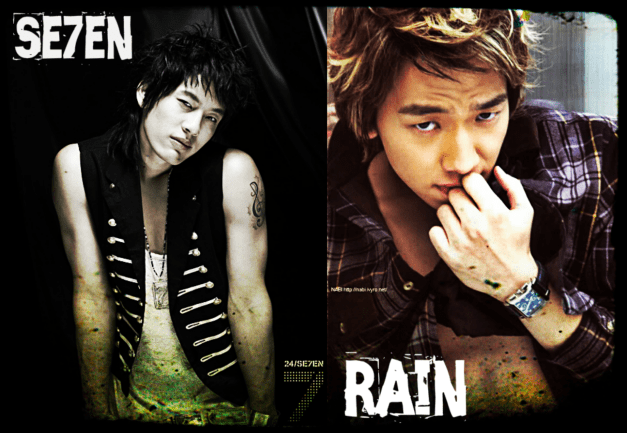
More importantly, he came up at a time where solo artists gave him some stiff competition. While Se7en was the Justin Timberlake of South Korea, Rain or (Bi) was the Usher.
Representing JYP Entertainment, Rain was Se7en’s main rival. And even though they collaborated in live musical performances, if you took a poll, I’m pretty such Rain would come out on top as the most dominant musical act from 2002-2004. Here’s the two performing together with Lee Hyori in a tribute to Seo Taiji.
*disclaimer: If you hadn’t read the intro, the following is a personal memoir about my 13 years of exploring Korean and Japanese music
The first song I heard of Seo Taiji was toward the end of 2005. It was a live performance of “Hefty End” followed by “Roboto.” At first listen…I honestly wasn’t that impressed. Mind you, I had already heard the music of Miyavi and Gackt. It sounded like a version of them so I wasn’t interested.
However, by the summer of 2006, after jamming out to the hits of H.O.T. and indulging on Moon Hee Jun’s version of nu-metal…I was ready for Seo Taiji.
Seo Taiji really deserves his own Hollywood biopic, similar to N.W.A’s “Straight Outta Compton.” He was one of the main forces that modernized pop music in Korean culture. Before him, they had some pop acts where the singer came out on stage in Christmas sweaters, looking all prim and proper. But Seo Taiji was the first to get out there and show Korea that they could produce high-energy music and perform it just as well, if not better than the Americans.
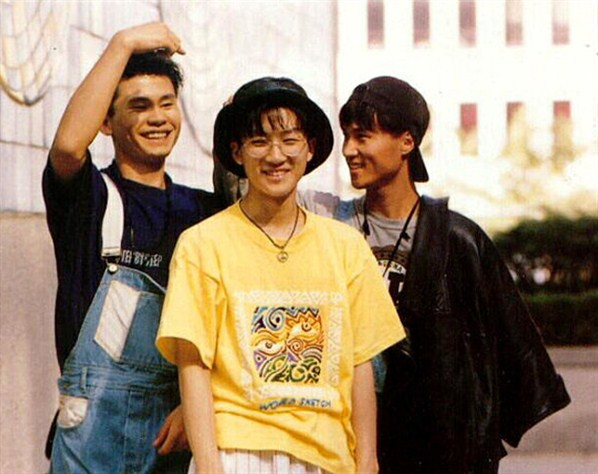
The South Korea of today is completely different from the way it was in the 1980s. From my understanding, it wasn’t until the 1988 Olympics in Seoul that brought a lot of money in and helped really develop it from a second or third world nation into a first-world country. Four years later, here comes this trio of skinny lads, two main dancers who could sing and rap…led by a scrawny kid in glasses who could rap, sing, dance and play the hell out of a guitar. He went by the name of Seo Taiji.
In 1992, Seo Taiji and Boys dropped this dope hit:
Seo Taiji and Boy’s “Nan Arroyo” exploded on the music scene and changed the dynamics of Korean pop culture. And the thing is, I had heard this song before. When I was learning about Se7en, I found a clip of him, Rain, and Hyori performing a tribute to it. Of course, at the time, I had no idea how influential Seo Taiji was or why that song was so significant.
Everything changed in the country after this. Seo Taiji became a household name and from what I read, his appeal was widespread, reaching fans of all demographics, male, female, teens, kids and adults. Thus, people called him the Michael Jackson of S. Korea. Fans swarmed venues and any place where the group made an appearance.
I even remember reading about a U.S. soldier who was stationed in S. Korea in 1994. He described how famous Seo Taiji was and how even he fell in love with Seo Taiji’s music. He said the first song he heard was “Certain Victory,” which cemented his fandom. That’s what did it for me as well. In truth, their first hit of “Nan Arroyo” didn’t really do anything for me. Too retro, influenced by the new jack swing. But the attitude and sound of “Certain Victory” was really got me to listen to his music.
The first time I had heard of H.O.T. was when I began looking for websites about Korean groups and other bands like DBSK. Almost every website I came across put two names up on the highest echelon in the Korean music industry.
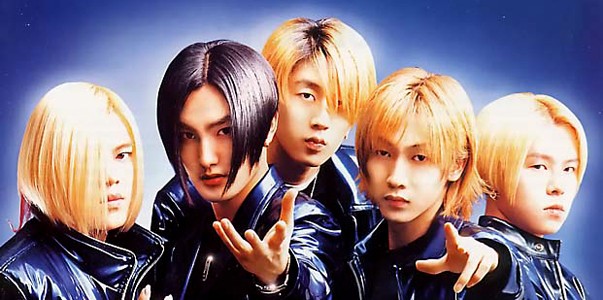
One was a man named Seo Taiji. The website touted that his popularity in Korea was on par to Michael Jackson’s phenomenon in U.S. when “Thriller” hit the scene. The other name was H.O.T., which stood for “High-Five of Teenagers.” Now, if you think the name was lame, the picture I saw of them in anime hair and metallic costumes gave the same impression. My initial thought was that H.O.T was just as manufactured as Super Junior appeared to be. So, I passed on both of them.
*disclaimer: If you hadn’t read the intro, the following is a personal memoir about my 13 years of exploring Korean and Japanese music.
As I continued to get deeper and deeper into Korean music and their culture. One of the first things I learned was how strict they were about broadcasting songs they deemed unsuited for public consumption. If a song was too materialistic, or promoted an unhealthy lifestyle, it wouldn’t be allowed to broadcast on the major stations.
Deep down, I think I respected that, considering how much I blame the entertainment industry for how immoral and backwards my own generation had become here in the states. However, as I’d eventually grow as an artist, I confess, I do think there is some corruption when it comes to such practice. Meaning, if you wanted, you could very well sway the deciding members on what should be deemed suitable or unsuitable. But I suppose that’s for another essay.
I also loved how in South Korea, they have dance shows and variety programs where the top celebrities come together and just straight up dance it out or to promote their current singles. At the time, some of the most popular shows were “X-Man,” “Love Letter,” and “Golden Star Bell”. Some of the regulars were famous names like Lee Minwoo, Jang Woo Hyuk, Tony An, and of course Yunho and Micky representing DBSK. Here, you’ll see Yunho dancing with Jang Woo Hyuk in the middle.
Now then…allow me take a moment to introduce you to two names here. Jang Woo Hyuk and Tony An. It took me a while to pronounce Jang Woo Hyuk properly. I believe it’s supposed to sound like, John Woo Yuh. Forgive me if I botched that.
It was just by chance that I had downloaded some of their music the month before I saw them on these variety shows. And dude…their music was amazing. It added a bit of variety to my k-pop tastes. DBSK and Super Junior handled the boy-band sound. Se7en gave me a solo Justin Timberlake vibe with his hits like “Passion” and “Crazy”.
But Jang Woo Hyuk and Tony An were something different altogether.
Jang Woo Hyuk was an amazing dancer. He was featured in numerous compilation videos as one of Korea’s premier pop-and-lockers. And as a solo artist, he’s a Bonafide rapper whose voice, I really can’t compare to anyone else. I listened to his song, “Flip Reverse” so many times that I think it was the first Korean song in which I memorized all of the lyrics.
I rapped it for my older brother when he came to visit. I think he was impressed. Not to mention, it was really remarkable how much hip hop had an influence on other countries around the world. It’s like everyone took a piece of it and modified the art to fit their own styles. But still…their own style. I think there’s a difference between being influenced by a culture and straight up swagger jacking. Some Korean artists are guilty of this. But I don’t believe Jang Woo Hyuk’s one of them.
And when it came to Tony An…the first song I heard of his was “Yutzpracachia’s Love”. Odd sounding title, I know. But like I said. It gave my palate some much needed variety. Tony’s song had a more mature R&B vibe to it that wasn’t overpowering or aggressive. Some nights after working the closing shift as a delivery driver, Tony An’s songs were just what I needed to unwind and relax.
But more than that…Tony An could rap and compose his own songs. Like Jang Woo Hyuk, Tony’s voice was unique. Not what you’d expect to hear from a soloist. It’s hard to explain. One of my top five favorite Korean songs of all time, was performed by Tony An. In fact, I found that a lot of my favorite “timeless” songs have managed to blend classical music from Mozart, Brahm or Beethoven in with a modern sound.
Tony An – “Love is Beautiful When You Can’t Have it”
Now, the funny thing about Jang Woo Hyuk and Tony An is they have a lot more in common than their unique abilities as solo artists. Remember when I said that the mark of a legendary group is one in which all the members could excel on their own if they went solo? Well…turns out Jang Woo Hyuk and Tony An were once part of the same group. And that group was called H.O.T. Yep, the same H.O.T, I passed on early in this chapter.
More than that…But just like in the states where we have end of the year musical award shows like the Grammys or the VMAs, they have the same of their own brand in Korea. In this next video, you’ll see groups like CSJH, Super Junior and DBSK holding it down in which they sing a medley of songs. One of which, caught my attention the first time I heard it. For the life of me, I’ve been trying to find out the original artist who sings the song @2:16. It’s being performed by DBSK…But this performance, it’s a tribute to the original artist. The original artist was none other than H.O.T.
The ORIGINAL “IYAH!”
Straight up, that’s Jang Woo Hyuk rapping at 00:54 seconds in and Tony An at 1:08.
Now, ladies and gentlemen…I cannot begin to tell you how profound the effect H.O.T had on me. I was 19-years-old. DBSK was the group that got me hooked in to k-pop. But H.O.T. will always be the greatest.
By early November of 2005…the novelty of Japanese rock music was wearing off. I still enjoyed it. But the waves that once washed over me…it’s like I had gotten used to the temperature and now found the waters lukewarm.
*disclaimer: If you hadn’t read the intro, the following is a personal memoir about my 13 years of exploring Korean and Japanese music.
In South Korea, you can tell the singers and groups pride themselves on their ability to dance. The following was one of the first videos I downloaded in which, the most popular singers of the day got together for a Christmas special to dance it out. You’ll find Se7en at 1:17 in. Followed by Rain…and then Minwoo of Shinhwa, then the guy who I’d come to call the best.
A popular style of dance at the time was an innovative form of pop-and-locking as well as the wave. Se7en was an awesome freestyle dancer. I learned that his main competition was another solo artist named Bi or Rain, who everyone was calling the Korean Usher. But the man who I definitely considered the best by a landslide when it comes to dancing…is U-Know.
It was the middle of December of 2005 when I saw this exact video:
lol, now aside from the “Ah’s” and “Oh’s” you may have noticed a dancer doing some amazing things. The waves are so simple yet complex at the same time. In order to do them well, you have to have good body control. Something, I felt I was capable of. His name is U-Know, or Yunho…And mind you…even though I was watching it in December of 2005, that video was from 2004. Surely there had to be more.
I’d come to find out Yunho was the leader of a Korean Boyband called DBSK and dude…Discovering DBSK was an early Christmas present to myself. When I say K-pop got me through college. I mean it.
That December, I was hoping to go home and spend Christmas with family. But from delivering pizzas, I caught a flat tire and couldn’t afford to come home. For two weeks, I was alone for the first time for the first time in my life. I’ve felt loneliness in the sense of being surrounded but not connecting with anyone. But the legit physical loneliness, I wasn’t quite used to at the time. Growing up, I always had brothers or some company present. Being alone for Christmas my first year away from home was abysmal. The only glimmer of happiness that got me through the holidays was DBSK. Like uncovering a buried treasure map, sparking a sense of adventure to see where it leads.
To understand how culturally significant DBSK was, I have to tell you a little bit about their history. All of which, I learned gradually throughout 2006. To put it in perspective, its sort of like how Jive Records was the label for the Backstreet Boys. Then came Nsync and Britney Spears. They were all under the same label at one point and dominated the American pop scene I’d say from 1998-2002ish.
In South Korea, the most prominent music agency is called SM Entertainment. In the thirteen years I’ve been listening to Kpop, SM may have had some close competition with other labels in which there was the big three, such JYP, YG, and it used to be DSP Media (home to Sechskies and SS501). But SM Entertainment has always remained at the top.
Very similar to how the Backstreet Boys were put together, with a benefactor picking out five talented youths and molding them to be superstars, South Korea’s entertainment agencies work the same way…except ten times tougher, with more rules, discipline, and longer years of training. That’s how they start out, as trainees to the agency and it takes years before they debut. Sometimes, they don’t.
DBSK also known as TVXQ or Dong Bang Shin Ki, consisted of Jaejoong, Micky Yoochun, Xiah Junsu, Max Changmin, and Yunho. All of them were hand-picked and groomed by SM Entertainment to sing, dance, take the lead and dominate. Just like their predecessors, which I’ll get into later.
But whatever, right? Bunch of talk, right? So what if ya boy Yunho can dance. I thought this was about music? How good is DBSK?
The first music video I saw of DBSK as a group was “Rising Sun.” And dude…I’m telling this group was the complete package.
II. The J-Rock Phase: Miyavi, Gackt & more L’Arc En Ciel
J-Rock stands for Japanese Rock.
By Spring Break of 2005, during my senior year of high school, I learned that I was accepted into a film school in Tampa, Florida. Knowing my future was secure was a relief. There wasn’t a lot of angst or trepidation in my heart at the time. Just full of hope and an eagerness to leave the nest. Every day since, I woke up, fully aware that it was another day to say goodbye to Georgia and the friends I had come to depend on.
*disclaimer: If you hadn’t read the intro, the following is a personal memoir about my 13 year journey of exploring Korean and Japanese music.
Having already been introduced to L’Arc en Ciel’s “Ready Steady Go” video…I was curious. What else they got? I learned that their genre was called “j-rock” so I searched for that on Limewire.
Apparently in 2004, early 2005, the biggest names in J-Rock were indeed L’Arc-en-Ciel…as well as a Japanese rock vocalist named Gackt. And man…hahahaha! Not gonna lie, I’m about to reveal some embarrassing stuff in talking about these guys.
So, mind you, from 5th grade to 12th, I was raised in Augusta, Georgia…which is considered a more country, gritty version of Atlanta. Meaning, everything you’ve heard regarding the stereotypes of blacks and whites had some truth to them in this city. That’s not to slight Augusta…because the thing is, the people know how they are and they don’t see it as a bad thing. Yes, there’s racism and a somewhat semblance of unspoken segregation, but people seemed cool with that. Most teens tended to stick to their own…
Had I been born and spent my whole life in Augusta, I probably would’ve fallen into a stereotype as well. But my parents were military. I moved around and attended multiple elementary schools ranging from south Florida to a place deep in the heart of Texas called Fort Hood. When you’ve moved around as much as I have, you know the world is much bigger. That America is made up of so many cultures.
And when you’re attending school on a military base, you’re afforded the luxury of just being yourself and making friends, because all the other kids are just like you. They’ve all moved around through their parent’s military transfer. So they understand and are more likely to accept you the way you are. But once you leave the base and start going to school with the civilian folk…yeah. You’ll find how different you are. And I think on a subconscious level, the natives don’t take too kindly to some new kid coming in and messing up the status quo.
My point in mentioning this, is that for years of being more or less stuck in Augusta, Georgia…I wasn’t exposed to a lot of diversity when it comes to the cultures. So when I discovered Gackt and L’Arc-en-Ciel…it was somewhat of a shock that had me questioning my own sexuality.
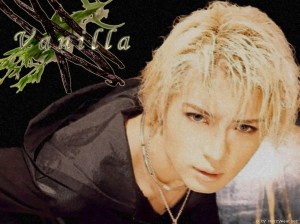
Remember, this was early 2005, a very conservative Christian time in the country. Lady Gaga wouldn’t blow up till late 2008-ish. And you see, in Japan they embrace this thing called “Visual Key”. Plainly put, it’s straight up androgyny, a style where men make themselves appear like women. They wear feminine makeup, eye-lashes and longer hair where it becomes difficult to discern whether they are male or female.
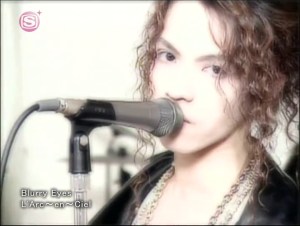
L’Arc-en-Ciel’s lead singer was notorious for this. Even without the make up, Hide looks like a girl. And just to make sure I wasn’t going crazy, I’d eventually ask my first roommates in Tampa to rate his appearance in “Blurry Eyes” on a one-to-ten scale. And my roommate without hesitation said… “I’d hit that.” As you can imagine, I laughed for some time. Not just at the humor in it, but the realization that it wasn’t just me. I’m not gay and I don’t think I should feel bad if I’m fooled by a person’s appearance.










 Stage In The Sky